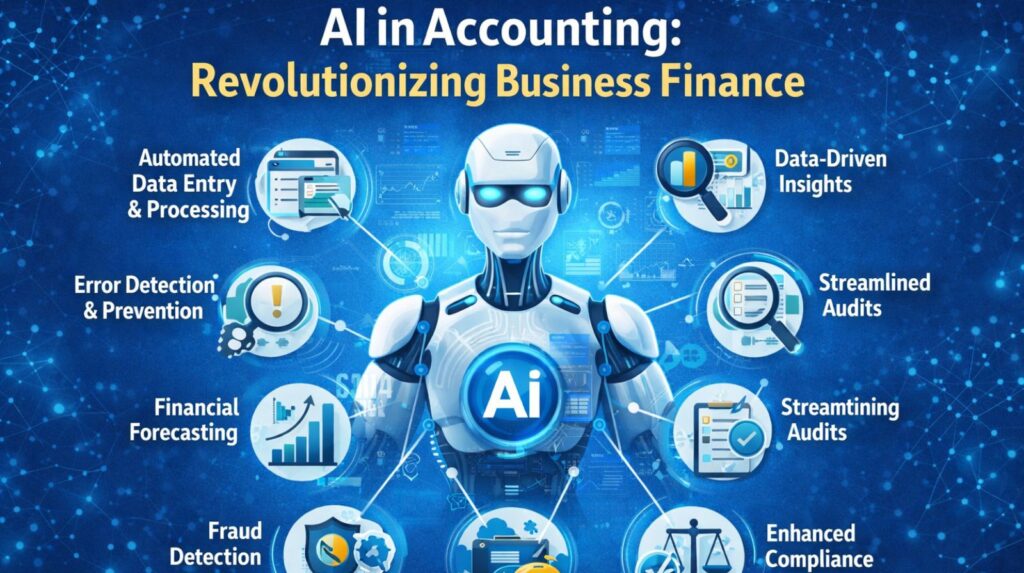
In 2026, AI in Accounting has become a game-changer for businesses, especially for small and medium enterprises (SMEs) in India. As the landscape of financial management evolves, the shift from manual processes to automation is not just a trend but a necessity. This blog explores the transformation brought about by AI, highlighting its benefits, real-life use cases, and the common pitfalls to avoid during this transition. Businesses using Explore accounting automation tools gain a competitive edge.
The integration of AI in accounting is reshaping how businesses manage their finances. With the ability to process vast amounts of data quickly, AI provides real-time insights that were previously unattainable through manual methods. This shift not only enhances accuracy but also enables faster reporting, allowing decision-makers to act promptly. In 2026, many SMEs are leveraging AI to streamline their accounting processes, resulting in significant time and cost savings.
AI’s role in accounting is not limited to basic number crunching; it extends to predictive analytics and automated reporting. By analyzing historical data, AI can forecast future trends, helping businesses make informed decisions. As a result, the importance of AI in accounting cannot be overstated, as it facilitates smarter decision-making and drives growth.
The transition from manual to automated accounting systems marks a significant turning point for businesses. Manual accounting involves tedious tasks such as data entry, reconciliation, and report generation, which are not only time-consuming but also prone to human error. In contrast, automated accounting systems utilize AI to perform these tasks efficiently and accurately.
Benefits of Automated Accounting
One of the primary advantages of automated accounting is the reduction in time spent on routine tasks. For instance, businesses can automate invoice processing and bank reconciliations, freeing up valuable resources for strategic initiatives. Additionally, automated systems provide real-time financial insights, enabling businesses to monitor their performance continuously.
Cost Implications
While the initial investment in automated accounting solutions may seem daunting, the long-term savings often outweigh the costs. Businesses that implement automation typically experience lower operational costs and improved cash flow management. For example, companies using Learn about Tally on Cloud benefits have reported substantial savings in labor costs due to reduced manual intervention.
Scalability and Flexibility
Automated accounting systems are designed to grow with the business. As SMEs expand, their financial needs become more complex. Automated solutions offer the scalability required to handle increased transaction volumes without compromising accuracy. This flexibility is crucial in a rapidly changing business environment.
AI plays a pivotal role in enhancing financial decision-making. By leveraging advanced algorithms and machine learning, AI can analyze data patterns and provide insights that inform strategic decisions. In 2026, businesses are increasingly relying on AI to enhance their financial planning and analysis processes.
Real-Time Data Analysis
One of the standout features of AI in accounting is its ability to provide real-time data analysis. This capability allows businesses to track their financial health continuously and make timely adjustments. For instance, companies can monitor cash flow and expenses in real-time, enabling them to react swiftly to any financial discrepancies.
Predictive Analytics
Predictive analytics powered by AI enables businesses to forecast future financial outcomes based on historical data. This foresight is invaluable for budgeting and resource allocation. Companies using Discover cloud accounting solutions can anticipate market trends and adjust their strategies accordingly, ensuring they remain competitive.
Enhanced Risk Management
AI also enhances risk management by identifying potential financial risks before they escalate. By analyzing various financial indicators, AI can alert businesses to anomalies that may require attention. This proactive approach to risk management is essential for maintaining financial stability in an unpredictable market.
The impact of AI in accounting is evident through numerous success stories from SMEs and startups. These businesses have embraced automation to streamline their financial processes and achieve remarkable results.
Case Study: A Retail Startup
A retail startup in India implemented an automated accounting system that integrated AI for inventory management and sales tracking. By automating these processes, the company reduced its accounting workload by 50%, allowing its finance team to focus on strategic initiatives. The real-time insights gained from the system enabled the startup to optimize inventory levels, reducing holding costs by 20%.
Case Study: A Manufacturing SME
A manufacturing SME adopted AI-driven accounting software to enhance its financial reporting. The software automated data entry and generated comprehensive financial reports in minutes, compared to the days it took manually. This efficiency not only improved accuracy but also provided the management team with the insights needed to make informed decisions quickly. Businesses using Understand manual vs automated accounting have reported similar transformations in their financial operations.
Case Study: A Service-Based Business
A service-based business utilized AI to automate its billing and invoicing processes. By integrating AI into its accounting system, the company reduced billing errors by 80% and improved cash flow by ensuring timely invoicing. This case illustrates how AI can significantly enhance operational efficiency and financial health.
Determining the return on investment (ROI) for transitioning to cloud and AI accounting systems is crucial for SMEs considering this shift. In 2026, businesses are increasingly finding that the benefits far outweigh the costs.
Cost Savings
One of the most tangible benefits of switching to cloud and AI systems is cost savings. By reducing the need for manual labor, businesses can allocate their resources more effectively. For example, companies that implement AI business growth strategies typically see a significant reduction in labor costs, which can lead to increased profitability.
Improved Accuracy
AI-driven accounting solutions significantly enhance accuracy by minimizing human error. This improvement reduces the risk of costly mistakes that can arise from manual data entry. Businesses that invest in automated systems often find that their financial reporting is more reliable, leading to better decision-making.
Time Efficiency
The time saved through automation can be redirected toward strategic initiatives that drive growth. For instance, finance teams can focus on analysis and planning rather than mundane tasks. This shift not only enhances productivity but also fosters innovation within the organization.
While transitioning to AI and automated accounting systems offers numerous benefits, businesses often encounter challenges. Understanding these common mistakes can help SMEs navigate the process more effectively.
Underestimating the Learning Curve
One common mistake is underestimating the time and resources required for training staff on new systems. Implementing AI in accounting necessitates a shift in mindset and skill sets. Companies should invest in comprehensive training programs to ensure employees are equipped to utilize the new technology effectively.
Failing to Choose the Right Solution
Not all accounting software is created equal. Businesses may choose a solution that does not align with their specific needs, leading to frustration and inefficiency. Conducting thorough research and selecting a system that meets the unique requirements of the business is crucial for success.
Neglecting Data Security
As businesses transition to cloud-based solutions, data security becomes a paramount concern. Failing to implement robust security measures can expose sensitive financial information to risks. Companies must prioritize data security during the transition to safeguard their financial data.

4.9 google Reviews
Lorem ipsum dolor sit amet, consectetur adipiscing elit. Ut elit tellus, luctus nec ullamcorper mattis, pulvinar dapibus leo.