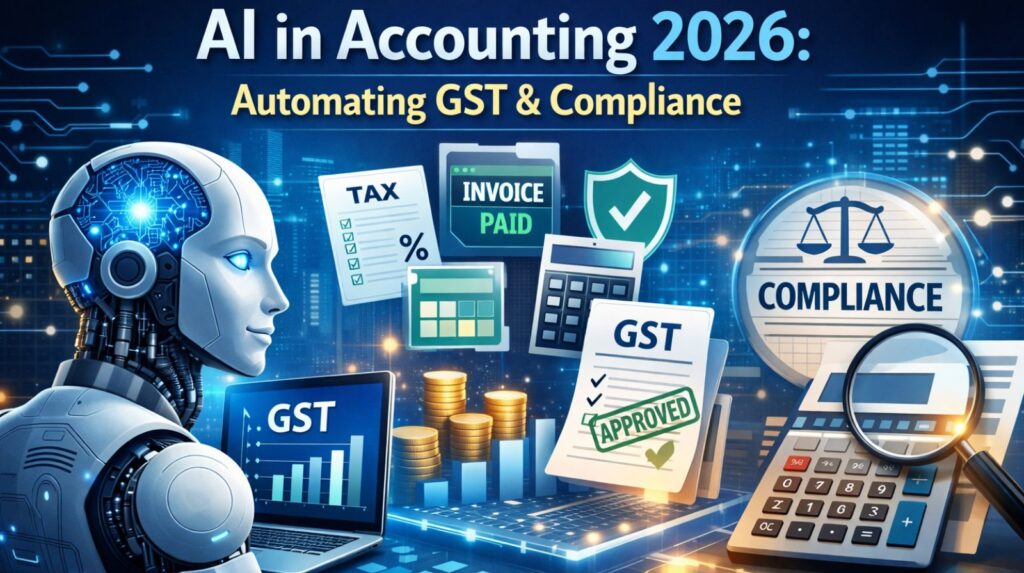
The landscape of AI in Accounting is undergoing a seismic shift as businesses transition from manual processes to . In 2026, the integration of artificial intelligence in accounting is not just a trend; it’s a necessity for staying competitive. Companies are leveraging AI tools to streamline GST filing, automate billing processes, and enhance compliance, ultimately reducing human errors and ensuring real-time accuracy. This blog explores how Indian SMEs are adopting these innovations to transform their accounting practices.
Today’s businesses face immense pressure to operate efficiently and accurately. The shift from manual accounting to AI-driven solutions has been pivotal. Many organizations are discovering that using AI tools for businesses not only simplifies their accounting processes but also enhances their overall productivity.
In 2026, the adoption of AI in accounting is expected to grow exponentially, as companies recognize the potential of technology to eliminate repetitive tasks and focus on strategic decision-making. This transition is crucial for Indian SMEs aiming to thrive in a competitive market.
The Role of AI in Modern Accounting
AI technologies, such as machine learning and natural language processing, are transforming how financial data is processed and analyzed. Businesses are increasingly utilizing AI to automate data entry, reconciliations, and reporting, allowing accountants to devote more time to strategic initiatives.
The Competitive Advantage of Automation
The move towards automation is not merely about keeping pace with technology; it’s about gaining a competitive edge. Companies that embrace AI-driven accounting can respond to market changes more swiftly, ensuring they remain relevant in an ever-evolving business landscape.
Despite the advancements in technology, traditional accounting practices still face significant challenges. Many businesses struggle with time-consuming manual processes that are prone to errors. The reliance on spreadsheets and manual entries can lead to discrepancies, impacting financial reporting and compliance.
Common Issues in Manual Accounting
Businesses using automated compliance solutions can mitigate these challenges by ensuring accuracy and efficiency in their accounting processes.
The Need for Change
The increasing complexity of financial regulations and the demand for real-time reporting have made it imperative for businesses to rethink their accounting strategies. Embracing AI can address these challenges effectively.
AI is revolutionizing the way businesses manage their GST, invoicing, and compliance workflows. By automating these processes, companies can significantly reduce the time and effort required for compliance.
Streamlining GST Filing
One of the most significant impacts of AI in accounting is in the area of GST automation. Businesses can now automate the entire GST filing process, ensuring timely submissions and reducing the risk of penalties.
Companies leveraging GST automation strategies can easily track their GST liabilities and generate accurate returns, which is crucial for compliance in India’s complex tax landscape.
Automating Invoicing Processes
AI-driven billing software can automate invoice generation, sending, and tracking, ensuring that businesses get paid faster. This not only improves cash flow but also minimizes human error in invoicing, which can often lead to disputes.
Ensuring Real-Time Compliance
With AI, businesses can monitor compliance in real-time, receiving alerts for any discrepancies or potential issues. This proactive approach allows companies to address compliance challenges before they escalate.
Numerous Indian MSMEs are already reaping the benefits of AI in their accounting practices. These real-world examples illustrate the transformative power of technology in finance.
Case Study: A Retail Business
A retail company implemented AI-driven billing software to automate its invoicing process. As a result, the business reported a 30% reduction in invoice processing time and a significant decrease in billing errors. This allowed the company to focus on customer service and growth.
Case Study: A Manufacturing Firm
A manufacturing SME adopted AI tools for automating GST compliance, which streamlined their tax filing process. The company now files its GST returns with greater accuracy and has reduced its compliance-related penalties by 50%.
Businesses using AI billing software benefits are not only enhancing their operational efficiency but also improving their financial health.
The Impact on Financial Decision-Making
By adopting AI, these businesses have gained access to real-time data analytics, empowering them to make informed financial decisions. This agility is crucial in today’s fast-paced market environment.
The integration of AI in Accounting offers numerous benefits that can significantly enhance a business’s financial operations.
Cost Savings
AI-driven solutions can reduce the need for extensive manpower in accounting, leading to significant cost savings. By automating repetitive tasks, businesses can allocate resources more effectively.
Speed and Efficiency
AI can process large volumes of data at incredible speeds, enabling faster invoicing and compliance reporting. This efficiency translates into improved cash flow and operational performance.
Enhanced Accuracy
With AI, the risk of human error is drastically reduced. Automated systems ensure that financial data is accurate, which is vital for compliance and reporting.
Scalability
As businesses grow, AI systems can easily adapt to increasing data volumes and complexity. This scalability ensures that companies can maintain their accounting efficiency even as they expand.
Businesses using future trends in AI finance can stay ahead of the curve, ensuring they are well-equipped to handle future challenges.
As we look ahead to 2026 and beyond, several trends are emerging in AI-powered finance that businesses should be aware of.
Increased Integration of AI in Financial Systems
The integration of AI in Accounting with existing financial systems will become more seamless, allowing for enhanced data sharing and collaboration across departments. This will lead to more holistic financial management.
Rise of Predictive Analytics
Predictive analytics powered by AI will enable businesses to forecast financial trends and make proactive decisions. This capability will be crucial for strategic planning and risk management.
Enhanced Cybersecurity Measures
With the rise of digital transactions, cybersecurity will become a top priority. AI will play a significant role in identifying and mitigating potential threats to financial data.
Focus on Ethical AI
As AI becomes more prevalent in finance, ethical considerations will take center stage. Businesses will need to ensure that their AI implementations are transparent and fair, particularly in areas like credit scoring and compliance.

4.9 google Reviews
Lorem ipsum dolor sit amet, consectetur adipiscing elit. Ut elit tellus, luctus nec ullamcorper mattis, pulvinar dapibus leo.