The Future of Accounting Software is being reshaped by rapid technological advancements, especially the integration of cloud computing and artificial intelligence. For Indian SMEs, understanding these changes is crucial to staying competitive, efficient, and compliant. This evolution is not just about new tools but a fundamental shift in how financial data is managed, analyzed, and utilized for strategic decision-making.
In this article, we explore how Tally, a trusted name in accounting, is adapting to and leading this transformation through cloud integration and AI-driven analytics. We’ll cover key benefits, emerging trends, implementation challenges, and actionable steps to help your business embrace the future confidently.
Tally is one of India’s most widely used accounting software solutions, known for its simplicity, reliability, and compliance with local taxation laws like GST. For decades, it has been the go-to choice for small and medium businesses, accountants, and auditors for managing day-to-day bookkeeping, invoicing, inventory, and financial reporting.
Originally designed as an on-premise solution, Tally has evolved significantly. Today, it supports cloud-enabled deployments and is increasingly integrating advanced features like automation and data analytics. This adaptability makes it a cornerstone in the ongoing transformation of the Future of Accounting Software.
Understanding Tally’s core capabilities is essential to appreciating how it fits into modern, tech-driven accounting environments. Its familiarity among users, combined with continuous innovation, positions it as a key player in the next generation of financial management tools.
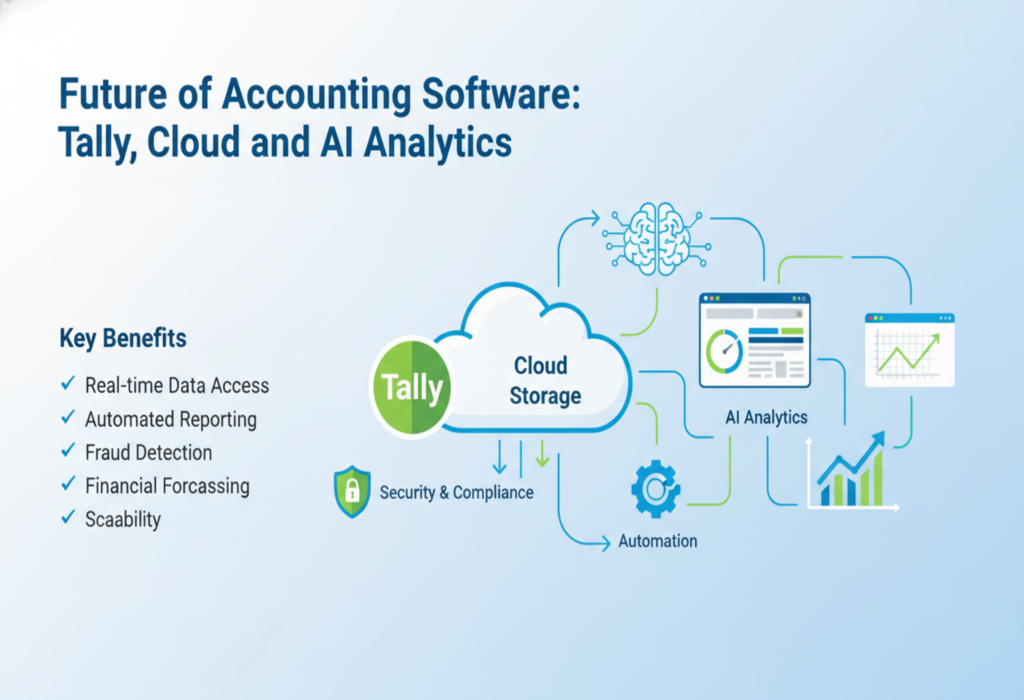
Cloud technology has revolutionized nearly every industry, and accounting is no exception. Moving from traditional, localized software to cloud-based systems offers flexibility, scalability, and accessibility that on-premise solutions simply cannot match. For businesses using Tally, cloud integration means that financial data can be accessed securely from anywhere, at any time, using any internet-connected device. This is particularly beneficial for businesses with multiple branches, remote teams, or on-the-go decision-makers who need real-time information.
Cloud-based [Tally software features](/tally-features) also simplify collaboration. Accountants, managers, and auditors can work on the same data simultaneously without version conflicts or delays. Automated backups and updates ensure that the system is always current and secure, reducing IT overhead and risks associated with data loss. Moreover, cloud platforms enable seamless integration with other business tools such as CRM, ERP, and banking systems. This interconnected ecosystem is a defining aspect of the Future of Accounting Software, making financial management more cohesive and efficient.
Artificial intelligence and data analytics are transforming accounting from a reactive, record-keeping function into a proactive, strategic asset. AI can automate repetitive tasks, identify patterns, detect anomalies, and generate predictive insights that help businesses make smarter financial decisions.
In the context of Tally and similar platforms, AI enhancements can automate data entry, categorization, and reconciliation, reducing manual errors and freeing up time for higher-value activities. Machine learning algorithms can analyze historical data to forecast cash flow, predict expenses, and even recommend optimal payment terms or credit policies.
These capabilities are central to the Future of Accounting Software, where real-time, data-driven decision-making becomes the norm rather than the exception. For SMEs, this means not just keeping up with compliance but leveraging financial data for growth and competitiveness.
Combining Tally with cloud technology unlocks several powerful benefits:
● Real-Time Access and Collaboration: Stakeholders can view and update financial data from anywhere, improving responsiveness and decision-making.
● Scalability: Cloud solutions can easily scale up or down based on business needs, without significant upfront investment in hardware.
● Enhanced Security: Reputable cloud providers offer robust security measures, including encryption, multi-factor authentication, and regular audits, often surpassing what individual businesses can implement on-premise.
● Automated Updates and Backups: Software updates and data backups happen automatically, ensuring compliance and reducing downtime.
These advantages make [cloud accounting solutions](/cloud-accounting) an attractive option for businesses looking to modernize their operations without abandoning trusted tools like Tally.
AI is bringing intelligent automation and insight generation to accounting software. Key features include:
● Automated Data Entry: AI can read and process invoices, receipts, and bank statements, reducing manual input and errors.
● Anomaly Detection: Machine learning models can identify unusual transactions or patterns that may indicate errors or fraud.
● Predictive Analytics: By analyzing trends, AI can provide forecasts for revenue, expenses, and cash flow, aiding in financial planning.
● Natural Language Processing: Some systems allow users to query financial data using conversational language, making analytics more accessible to non-experts.
These functionalities represent the cutting edge of the Future of Accounting Software, empowering businesses to operate more efficiently and strategically.
Several trends are driving the evolution of accounting software:
● Increased Automation: Repetitive tasks like data entry, reconciliation, and report generation are becoming fully automated, allowing professionals to focus on analysis and strategy.
● Integration with Ecosystems: Accounting software is increasingly part of a broader business [ERP system integration](/erp-integration), connecting finance with sales, inventory, HR, and more.
● Focus on Data Security: With rising cyber threats, robust security protocols—including encryption, access controls, and compliance certifications—are becoming standard.
● Mobile-First Solutions: As remote work grows, mobile accessibility and usability are critical for accounting platforms.
● Sustainability and ESG Reporting: Businesses are under growing pressure to track and report environmental, social, and governance metrics, which modern software can facilitate.
These trends underscore the dynamic nature of the Future of Accounting Software and the need for businesses to stay informed and adaptable.
While the benefits are clear, adopting new accounting technologies comes with challenges:
● Cost of Transition: Moving to cloud-based or AI-enhanced systems may involve subscription fees, training costs, and potential downtime during implementation.
● Data Migration: Transferring historical data from legacy systems to new platforms can be complex and risky if not managed carefully.
● Skill Gaps: Employees may need training to use advanced features effectively. The role of accountants is shifting from data entry to data interpretation and strategy.
● Security Concerns: Entrusting financial data to third-party cloud providers requires due diligence. Businesses must ensure providers adhere to strict [data security best practices](/data-security).
● Compliance: Especially in a regulated market like India, ensuring that new systems comply with GST, income tax, and other legal requirements is essential.
Addressing these challenges proactively can smooth the transition and maximize the return on investment in modern accounting solutions.
Preparing for the Future of Accounting Software involves both technological and organizational steps:
1.Assess Current Needs and Gaps: Evaluate your existing accounting processes. Identify pain points, inefficiencies, and areas where automation or better insights could add value.
2.Choose the Right Tools: Select software that balances familiarity (like Tally) with modern features like cloud access and [AI in financial management](/ai-finance). Consider scalability, integration capabilities, and vendor support.
3.Plan for Data Migration: Work with experts to ensure a smooth, secure transfer of existing data to new systems. Test thoroughly before full implementation.
4. Upskill Your Team: Provide training for accountants and finance staff on new tools and technologies. Emphasize the growing importance of analytical skills.
5. Start with Pilot Projects: Implement changes in phases, starting with less critical functions to build confidence and troubleshoot issues.
6. Prioritize Security: Implement strong access controls, encryption, and regular audits. Choose providers with proven security credentials.
By taking these steps, businesses can not only adapt to changes but also leverage them for improved efficiency, insight, and growth.
Embracing the Future of Accounting Software is essential for staying competitive and efficient in today’s business environment. Whether you’re considering cloud migration, exploring AI enhancements, or seeking to integrate Tally with other systems, taking informed action now can set your business up for long-term success.
Explore our [automation tools for businesses](/business-automation) to learn how you can streamline your financial processes and make data-driven decisions with confidence.

4.9 google Reviews
Lorem ipsum dolor sit amet, consectetur adipiscing elit. Ut elit tellus, luctus nec ullamcorper mattis, pulvinar dapibus leo.