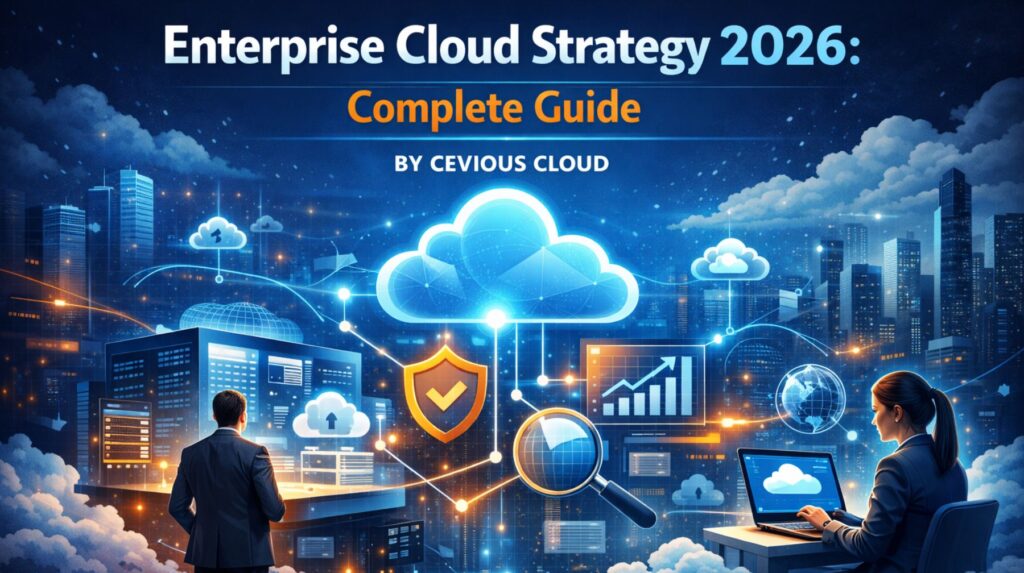
In today’s rapidly evolving digital landscape, developing a robust enterprise cloud strategy has become crucial for business success. As we navigate through 2026, organizations must adapt to new technological paradigms while ensuring scalability, security, and cost-effectiveness. This comprehensive guide explores the latest approaches to cloud infrastructure and how businesses can leverage them for competitive advantage.
An enterprise cloud strategy encompasses the policies, technologies, and procedures that guide an organization’s cloud computing initiatives. In 2026, this strategy has evolved beyond simple infrastructure decisions to become a core business enabler. Modern enterprise cloud strategy must address hybrid environments, artificial intelligence integration, and advanced security protocols.
Key Components of Modern Cloud Strategy
The foundation of any successful enterprise cloud strategy rests on several critical pillars. These include infrastructure optimization, security frameworks, compliance measures, and cost management protocols. As of 2026, organizations must also consider AI integration, edge computing capabilities, and sustainability metrics in their strategic planning.
Current Market Trends
2026 market analysis shows that organizations implementing a comprehensive enterprise cloud strategy achieve 40% faster time-to-market for new products. The shift towards hybrid and multi-cloud environments continues to accelerate, with businesses prioritizing flexibility and vendor independence.
Strategic Cloud Partnership with Cevious Cloud
Selecting the right cloud partner is crucial for enterprise cloud strategy success. [Cevious Cloud’s enterprise solutions](/solutions/enterprise-cloud-strategy) provide comprehensive infrastructure management, advanced security protocols, and AI-driven optimization tools that align with modern business requirements.
Cevious Cloud offers a full spectrum of enterprise-grade services, including:
● Hybrid cloud orchestration
● Multi-cloud management platforms
● AI-powered resource optimization
● Advanced security frameworks
● Real-time analytics and monitoring
Implementation Methodology
Our proven implementation framework ensures smooth transition and optimal performance. The methodology encompasses detailed assessment, strategic planning, phased migration, and continuous optimization cycles.
Enterprise-Grade Infrastructure Components
Modern enterprise cloud strategy requires robust infrastructure components that can scale with business demands. [Our hybrid cloud solutions](/solutions/hybrid-cloud) provide the foundation for building resilient and flexible systems.
In 2026, enterprise-grade infrastructure must include:
● High-performance computing resources
● Software-defined networking
● Automated storage management
● Container orchestration platforms
● Edge computing capabilities
Scalability and Performance
Infrastructure scalability remains a cornerstone of enterprise cloud strategy. Our architecture enables dynamic resource allocation and predictive scaling based on real-time demand patterns.
Hybrid vs Multi-Cloud Architecture
Understanding the distinctions between [hybrid and multi-cloud approaches](/solutions/multi-cloud) is crucial for developing an effective enterprise cloud strategy. Each model offers unique advantages and considerations for different business scenarios.
Hybrid cloud architectures provide:
● Optimal workload placement
● Enhanced data sovereignty
● Improved cost management
● Better compliance control
● Flexible resource allocation
Multi-Cloud Advantages
Multi-cloud strategies offer:
● Vendor independence
● Geographic distribution
● Risk mitigation
● Service optimization
● Enhanced reliability
Zero-Trust Security Framework
In 2026, security remains paramount in enterprise cloud strategy implementation. [Our zero-trust security framework](/security/zero-trust) ensures comprehensive protection across all cloud environments.
The modern security landscape demands:
● Identity-based access control
● Micro-segmentation
● Continuous monitoring
● Automated threat response
● Encryption at rest and in transit
Compliance and Governance
Regulatory compliance has become increasingly complex in 2026. Our framework ensures adherence to global standards while maintaining operational efficiency.
Successful [cloud migration](/services/cloud-migration) requires careful planning and execution. Our enterprise cloud strategy includes a detailed roadmap for seamless transition and optimization.
Assessment Phase
The initial phase involves:
● Workload analysis
● Dependency mapping
● Risk assessment
● Performance benchmarking
● Resource planning
Implementation Timeline
A structured timeline ensures smooth migration:
● Phase 1: Infrastructure preparation
● Phase 2: Application migration
● Phase 3: Data transfer
● Phase 4: Testing and validation
● Phase 5: Production cutover
Cost Optimization & ROI Analysis
Effective enterprise cloud strategy must deliver measurable business value. Our [ROI calculator](/resources/roi-calculator) helps organizations quantify the benefits of cloud adoption.
Cost Management Tools
2026 brings advanced cost optimization capabilities:
● AI-driven resource allocation
● Automated scaling policies
● Waste elimination tools
● Budget forecasting
● Usage analytics
Key performance indicators include:
● Resource utilization rates
● Application response times
● Cost per transaction
● System availability
● Security incident metrics
AI-Powered Cloud Management
Artificial intelligence has become integral to enterprise cloud strategy in 2026. Our AI-powered tools provide predictive analytics and automated management capabilities.
Automated Operations
AI automation enables:
● Predictive maintenance
● Dynamic resource allocation
● Intelligent monitoring
● Automated incident response
● Performance optimization
Advanced analytics provide:
● Capacity planning
● Cost forecasting
● Performance prediction
● Security threat detection
● Usage pattern analysis
Industry-Specific Solutions
Different industries require tailored approaches to enterprise cloud strategy. [Our case studies](/case-studies) demonstrate successful implementations across various sectors.
Healthcare organizations benefit from:
● HIPAA-compliant infrastructure
● Patient data protection
● Telemedicine support
● Research computing capabilities
● Emergency response systems
Financial Services
Banking and financial institutions require:
● Real-time transaction processing
● Regulatory compliance
● Fraud detection
● High-availability systems
● Disaster recovery

4.9 google Reviews
Lorem ipsum dolor sit amet, consectetur adipiscing elit. Ut elit tellus, luctus nec ullamcorper mattis, pulvinar dapibus leo.