In today’s digital landscape, Best cloud for startups India grapple with the challenges of downtime, rising cloud costs, and scaling issues. As businesses grow, the need for reliable cloud infrastructure becomes paramount. The choice between a or a single cloud strategy can significantly impact operational efficiency and cost management. Understanding these cloud strategies can help startups navigate their growth journey effectively. Businesses using cloud strategy for startups India gain a competitive edge.
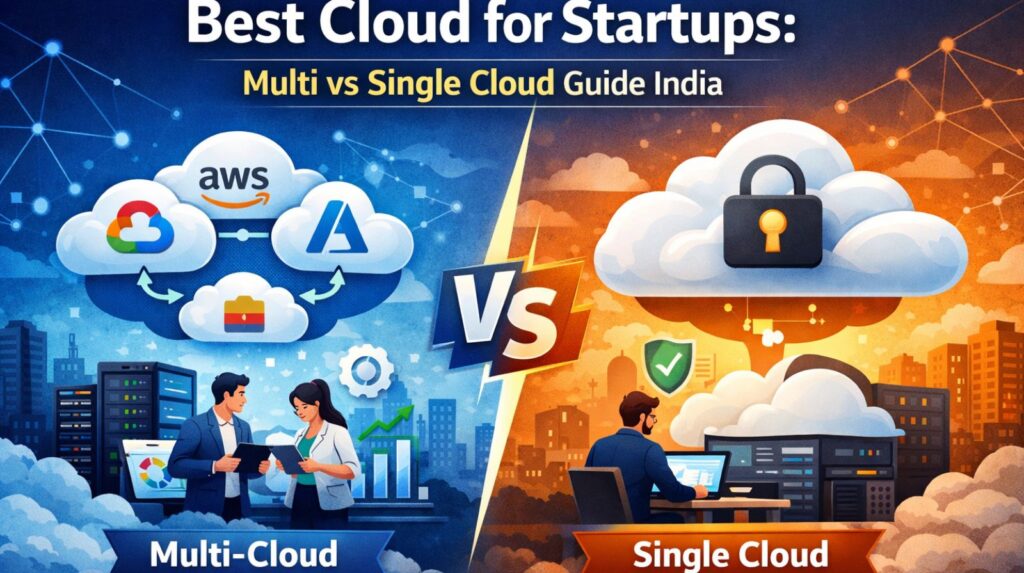
A single cloud strategy involves relying on one cloud service provider for all computing resources. This approach simplifies management and can often lead to lower costs due to bulk pricing. However, it can also create dependency on a single vendor, which may pose risks if the provider experiences outages or service disruptions.
On the other hand, a multi-cloud strategy uses services from multiple cloud providers. This approach allows businesses to leverage the strengths of different platforms, enhancing flexibility and reducing the risk of vendor lock-in. For instance, a startup might use one provider for storage and another for computing power, optimizing performance based on specific needs. Businesses using best cloud for startups gain a competitive edge.
Key Features of Single Cloud
● : Easier to manage with a single point of contact.
● : Potential for lower costs through consolidated services.
● : Uniformity in operations and processes.
Key Features of Multi-Cloud
● : Ability to choose the best services from different providers.
● : Reduced risk of service outages affecting the entire operation.
● : Tailoring resources to specific workloads for better efficiency.
When evaluating cloud strategies, cost is often a primary concern for startups. A single cloud provider usually offers predictable pricing models, which can be appealing for budgeting. However, as usage grows, costs can escalate unexpectedly.
In contrast, a multi-cloud strategy may introduce complexity in billing, but it can also provide opportunities for cost savings. By selecting the most cost-effective services from various providers, startups can optimize their cloud spending. For a deeper understanding of this, businesses using multi-cloud benefits gain a competitive edge.
Cost Considerations for Single Cloud
● : Simplifies budgeting and financial forecasting.
● : Unforeseen spikes in usage can lead to higher bills.
Cost Considerations for Multi-Cloud
● : Different providers may have varying pricing structures.
● : Ability to switch providers based on pricing changes.
Flexibility is crucial for startups, especially those that anticipate rapid growth or fluctuating demand. A single cloud provider may limit options when it comes to scaling or adapting services to meet changing needs.
In contrast, a multi-cloud strategy offers greater flexibility. Startups can choose services based on current requirements, whether that’s high-performance computing during peak times or cost-effective storage solutions during quieter periods. Businesses using cloud cost optimization gain a competitive edge.
Flexibility in Single Cloud
● : Fewer choices for services can restrict innovation.
● : Difficulties in switching providers can hinder growth.
Flexibility in Multi-Cloud
● : Ability to select the best tools for specific tasks.
● : Quickly respond to changing market conditions.
Performance is a critical factor for startups, especially those that rely on real-time data processing or high availability. A single cloud provider may offer robust performance, but it can also become a bottleneck if the provider faces issues.
Multi-cloud strategies can enhance performance by distributing workloads across different platforms. This not only improves reliability but also allows startups to optimize resource allocation based on performance needs. Businesses using challenges faced by Indian startups gain a competitive edge.
Performance in Single Cloud
● : Single provider can ensure stable performance metrics.
● : High demand can lead to slowdowns or outages.
Performance in Multi-Cloud
● : Distributing workloads can enhance speed and reliability.
● : Tailoring resources to specific applications for optimal results.
Security is paramount for any startup, especially in the face of increasing cyber threats. A single cloud provider may offer comprehensive security features, but it can also create a single point of failure.
Multi-cloud strategies can enhance security by diversifying risk. By distributing data and applications across multiple platforms, startups can mitigate the impact of a breach on their entire system. Moreover, different providers may offer unique security features that can be leveraged.
Security in Single Cloud
● : Easier to manage with a single provider.
● : A breach could compromise all data at once.
Security in Multi-Cloud
● : Different providers may offer superior security measures.
● : Reduces the impact of a single provider’s failure.
Scalability is essential for startups, particularly those experiencing rapid growth. A single cloud provider might offer straightforward scaling options, but it may not always keep pace with a startup’s evolving needs.
Multi-cloud strategies provide enhanced scalability. Startups can quickly add or reduce resources based on demand, ensuring they only pay for what they use. This adaptability is crucial for maintaining performance during traffic spikes or seasonal fluctuations.
Scalability in Single Cloud
● : Scaling may require significant planning and investment.
● : Upgrades can take time, affecting responsiveness.
Scalability in Multi-Cloud
● : Easily adjust resources to meet demand.
● : Pay only for the resources needed at any given time.
Indian startups often encounter unique challenges when implementing cloud solutions. Budget constraints, rapid growth, and the need for reliable infrastructure are common hurdles. Many businesses report difficulties in managing costs while ensuring adequate performance and security.
Common Challenges
● : Many startups operate on tight budgets, making cost management crucial.
● : Sudden increases in user demand can overwhelm systems.
● : Ensuring consistent uptime is essential for customer satisfaction.
Practical Examples of Cloud Strategies in Action
To illustrate the impact of cloud strategies, consider two startups: one using a single cloud provider and the other adopting a multi-cloud approach.
relies on a single cloud provider for all services. During a significant product launch, they experience downtime due to high traffic, resulting in lost sales and customer trust.
, on the other hand, utilizes a multi-cloud strategy. They allocate resources from different providers based on current demand, ensuring smooth performance during peak times. This flexibility allows them to scale quickly and maintain a high level of service.
The choice between multi-cloud and single cloud strategies often depends on a startup’s stage of growth. Early-stage startups may benefit from a single cloud provider for simplicity and cost-effectiveness. However, as they scale, transitioning to a multi-cloud strategy can provide the flexibility and performance needed to thrive.
Early-Stage Startups
● : Consider a single cloud provider for ease of management and lower initial costs.
● : Streamline operations and establish a solid foundation.
Scaling Startups
● : Transition to a multi-cloud strategy to enhance flexibility and performance.
● : Optimize resources and ensure reliability during growth phases.
Actionable Tips for Choosing the Right Cloud Strategy
1.: Understand your startup’s specific requirements, including budget, performance, and scalability.
2.: Research different cloud providers and their offerings to find the best fit.
3.: A combination of single and multi-cloud strategies may offer the best of both worlds.
4.: Keep a close eye on cloud spending to avoid unexpected expenses.
Choosing between a multi-cloud and single cloud strategy is a critical decision for Best cloud for startups. By understanding the benefits and challenges of each approach, founders can make informed choices that align with their growth objectives. As the cloud landscape evolves, staying adaptable and proactive will be key to leveraging these technologies effectively.

4.9 google Reviews
Lorem ipsum dolor sit amet, consectetur adipiscing elit. Ut elit tellus, luctus nec ullamcorper mattis, pulvinar dapibus leo.