Cloud ERP vs. On-Premise ERP: A Total Cost of Ownership (TCO

Cloud ERP vs. On-Premise ERP: A Total Cost of Ownership (TCO

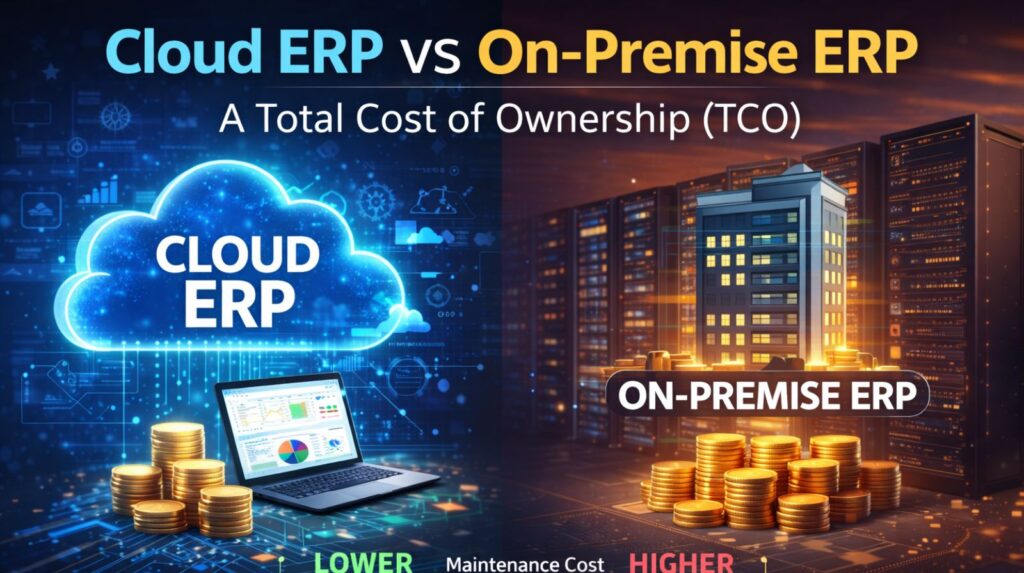
Understanding the Total Cost of Ownership (TCO) is crucial for business owners and IT decision-makers when evaluating ERP solutions. Many organizations focus solely on the initial purchase price of an ERP system, neglecting the long-term costs associated with ownership. This blog will provide a comprehensive comparison of Cloud ERP and On-Premise ERP, helping you make informed decisions for your business. 

Introduction: Understanding TCO in ERP Evaluation

The TCO of an ERP system goes beyond just the upfront costs. It includes ongoing expenses such as maintenance, upgrades, and operational costs. Businesses using Cloud ERP solutions gain a competitive edge by leveraging the scalability and flexibility that cloud-based systems offer. In 2026, it’s projected that companies will increasingly prioritize TCO in their ERP evaluations, recognizing that the cheapest option upfront may lead to higher costs down the line. Understanding TCO helps in making strategic investment decisions, ensuring that the chosen ERP solution aligns with long-term business goals. This blog will delve into the specifics of Cloud ERP and On-Premise ERP, providing insights that can guide your decision-making process.

1. Demystifying Cloud ERP

Cloud ERP refers to software hosted on remote servers and accessed via the internet. This model has gained popularity due to its flexibility and lower initial investment. Businesses using On-Premise ERP benefits often find that cloud solutions can provide similar functionalities with reduced overhead costs.

Advantages of Cloud ERP

One major advantage of Cloud ERP is its subscription-based pricing model, which can significantly reduce upfront expenses. Moreover, cloud solutions often come with automatic updates, ensuring businesses always have access to the latest features without additional costs.

Scalability and Flexibility

Cloud ERP systems are inherently scalable, allowing businesses to adjust their usage based on changing needs. In 2026, many SMEs are expected to opt for cloud solutions due to their ability to grow alongside the business without necessitating substantial additional investments.

Accessibility and Collaboration

Another benefit of Cloud ERP is its ease of access. Teams can access the system from anywhere, fostering collaboration and remote work. This flexibility has become increasingly important in today’s work environment, as businesses adapt to hybrid models.

2. Understanding On-Premise ERP

On-Premise ERP systems are installed locally on a company’s servers and managed internally. While this model has been around for decades, it comes with its own set of challenges and costs. Businesses using ERP implementation strategies often find that the initial investment can be substantial, but the long-term benefits may justify the expense.

Initial Costs and Licensing

The initial costs of On-Premise ERP include licensing fees, hardware purchases, and installation costs. These expenses can be significant, leading many businesses to hesitate before committing to this model.

Maintenance and Upgrades

Ongoing maintenance and upgrades are critical components of On-Premise ERP costs. Companies must allocate resources for IT staff to manage the system, conduct updates, and ensure security. In 2026, many organizations will need to consider these ongoing expenses when evaluating their ERP options.

Control and Customization

One key advantage of On-Premise ERP is the level of control it provides. Businesses can customize the system to meet their specific needs, which can be advantageous for industries with unique requirements. However, this customization often comes at a higher cost and requires dedicated IT resources. 

3. The True Cost: A Total Cost of Ownership (TCO) Comparison Breakdown

When comparing Cloud ERP and On-Premise ERP, a detailed TCO analysis is essential. This analysis should include initial costs, ongoing expenses, and potential hidden costs. Businesses using ERP security measures can also factor in the costs associated with data protection and compliance.

Initial Costs

For Cloud ERP, initial costs are generally lower due to the subscription model. In contrast, On-Premise ERP requires significant upfront investment in hardware and software.

Ongoing Costs

Ongoing costs for Cloud ERP typically include subscription fees, while On-Premise ERP incurs costs related to maintenance, updates, and IT personnel. In 2026, it is anticipated that many businesses will recognize that these ongoing costs can accumulate significantly over time.

Hidden Costs

Hidden costs can arise from downtime, training, and compliance issues. Cloud ERP solutions often mitigate these risks through built-in support and maintenance, while On-Premise systems may leave businesses vulnerable to unexpected expenses. 

4. Advantages and Limitations: Beyond the Price Tag

Both Cloud ERP and On-Premise ERP have their advantages and limitations, which can significantly impact TCO. Businesses using Digital transformation in ERP strategies should consider these factors when making their choice.

Advantages of Cloud ERP

Cloud ERP systems offer flexibility, scalability, and lower upfront costs. They also allow for easier collaboration and access, making them ideal for modern businesses that require agility.

Limitations of Cloud ERP

However, Cloud ERP may present challenges related to data security and compliance. Organizations must ensure that their cloud provider adheres to strict security measures to protect sensitive information.

Advantages of On-Premise

ERP On-Premise ERP provides greater control and customization options. Businesses with specific compliance requirements may find this model more suitable, as it allows for tailored solutions.

Limitations of On-Premise ERP

The major limitations include higher initial costs, ongoing maintenance requirements, and potential scalability issues. In 2026, many businesses may find that these limitations hinder their growth and adaptability. 

5. Choosing the Right Path for Modern Businesses

Selecting the right ERP solution involves understanding your business’s unique needs and long-term goals. Factors such as company size, industry, and growth projections will influence the decision.

Assessing Business Needs

Begin by assessing your organization’s specific needs. Consider the importance of scalability, customization, and control in your decision-making process.

Evaluating Costs

Conduct a thorough TCO analysis to evaluate both Cloud ERP and On-Premise ERP. This analysis should include initial costs, ongoing expenses, and potential hidden costs.

Future-Proofing Your Investment

In 2026, businesses must consider future-proofing their ERP investments. Choosing a solution that can adapt to changing market conditions and technological advancements is crucial for long-term success.

Conclusion: The Long-Term Value Proposition of Cloud ERP

In summary, understanding the Total Cost of Ownership is vital when comparing Cloud ERP and On-Premise ERP solutions. While On-Premise systems may offer control and customization, the long-term benefits of Cloud ERP—such as lower initial costs, scalability, and flexibility—make it an attractive option for many businesses. As organizations continue to adapt to changing market conditions, the value proposition of Cloud ERP will likely become even more compelling.


Efisiensi

Lorem ipsum dolor sit amet, consectetur adipiscing elit. Ut elit tellus, luctus nec ullamcorper mattis, pulvinar dapibus leo.

efisiensi.themes