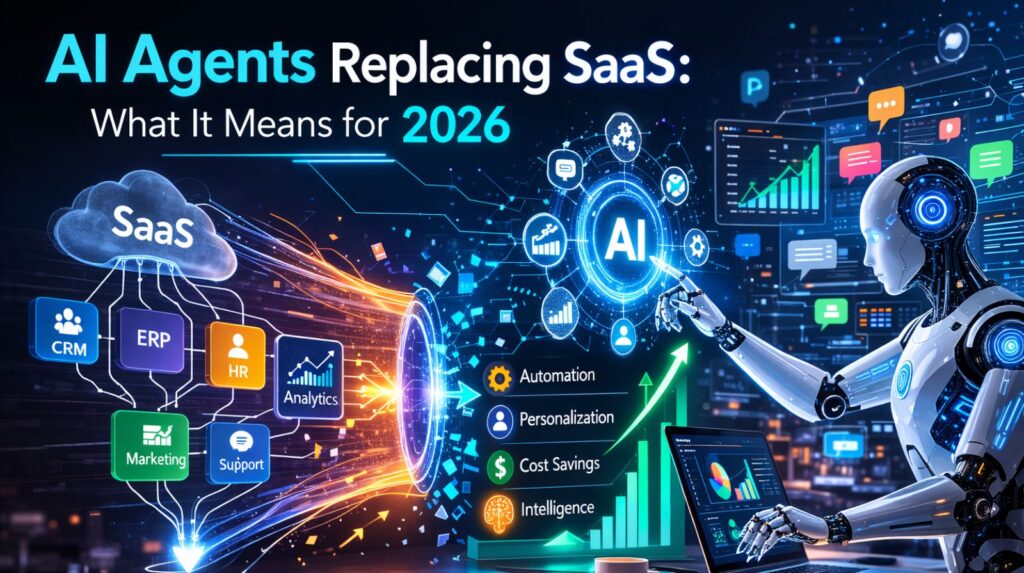
In recent years, businesses have relied heavily on multiple Software-as-a-Service (SaaS) platforms to manage various tasks like marketing, analytics, and operations. However, the landscape is evolving rapidly, with many organizations now transitioning towards AI Agents Replacing SaaS . This shift signifies the next evolution in business technology, where intelligent systems not only automate tasks but also enhance decision-making processes. As we navigate through 2026, understanding this transition is crucial for SMEs aiming to stay competitive. Businesses using AI tools for productivity gain a competitive edge by streamlining their operations and reducing manual workloads. The move from traditional SaaS to AI agents represents a significant transformation in how organizations operate, paving the way for more efficient and intelligent business practices.
AI agents are autonomous software systems designed to perform tasks and make decisions without human intervention. Unlike traditional SaaS tools that require user inputs for every function, AI agents leverage machine learning and data analysis to operate independently. This capability allows them to adapt to changing conditions and optimize processes in real-time. AI agents can analyze vast amounts of data, learn from patterns, and execute tasks ranging from simple data entry to complex decision-making. They differ from traditional automation tools that follow predefined rules and scripts. Instead, AI agents use algorithms to understand context and provide insights, making them a powerful asset for businesses. Businesses using [business automation solutions] can enhance their operational efficiency by integrating AI agents into their workflows. This integration allows for seamless task management and improved accuracy in decision-making.
Characteristics of AI Agents
AI agents possess several key characteristics that set them apart:
1. Autonomy: They can operate independently, making decisions based on data-driven insights.
2. Adaptability : AI agents learn and adjust their operations based on new information and changing environments.
3. Complexity Handling : They can manage complex tasks that require nuanced understanding and analysis.
Types of AI Agents
There are various types of AI agents, including:
• Chatbots: Used for customer service and support, handling inquiries in real-time.
• Predictive Analytics Agents : Analyze data trends to forecast outcomes, aiding in strategic planning.
• Robotic Process Automation (RPA) Agents : Automate repetitive tasks across various applications.
AI agents utilize a combination of artificial intelligence techniques, including natural language processing, machine learning, and data analytics, to function effectively. They gather data from various sources, analyze it, and make informed decisions based on their findings.
The core operation of AI agents involves several steps:
1. Data Collection: They continuously gather data from internal and external sources.
2. Analysis: Using algorithms, they analyze the collected data to identify trends and patterns.
3. Decision Making : Based on the analysis, AI agents make decisions or recommendations to optimize processes. Businesses leveraging [enterprise technology advancements] benefit from improved operational efficiency and strategic insights. The ability to process and analyze data in real-time allows organizations to respond swiftly to market changes.
Machine Learning in AI Agents
Machine learning is a crucial component of AI agents, enabling them to learn from past experiences and improve their performance over time. This capability allows AI agents to refine their decision-making processes, making them increasingly effective in their roles. Real-Time Processing
One of the significant advantages of AI agents is their ability to process information in real-time. This feature allows businesses to make immediate adjustments to strategies and operations, enhancing overall agility.
While both AI agents and traditional automation tools aim to streamline business processes, they differ significantly in their approach and capabilities. Traditional automation tools typically follow set rules and procedures, which can limit their effectiveness in dynamic environments. In contrast, AI agents offer enhanced flexibility and intelligence. They can adapt to new information and changing conditions, allowing for more efficient workflows. Businesses implementing [workflow automation strategies] can see substantial improvements in efficiency and productivity.
Efficiency
AI agents can handle multiple tasks simultaneously, whereas traditional tools may struggle with complex processes. This efficiency leads to faster turnaround times and improved service delivery.
Automation Capabilities
Traditional automation tools often require manual updates and configurations. In contrast, AI agents can learn and evolve, reducing the need for constant oversight and intervention.
Decision-Making
AI agents utilize advanced analytics to inform their decisions, leading to more accurate outcomes. Traditional tools, however, may rely on static data and predefined rules, limiting their effectiveness in dynamic situations.
The shift towards AI Agents Replacing SaaS reflects a broader trend in enterprise technology, where organizations seek more intelligent solutions to enhance productivity. Traditional SaaS tools often require integration across multiple platforms, leading to inefficiencies and increased complexity. In 2026, businesses are increasingly recognizing the benefits of AI agents for streamlining operations. These agents provide a unified approach to task management, reducing the need for disparate systems. Businesses using [AI decision-making processes] can make informed choices that align with their strategic goals, leading to enhanced operational efficiency.
Integration and Scalability
AI agents can be easily integrated into existing systems, allowing businesses to scale their operations without significant disruptions. This integration is crucial for SMEs looking to enhance their capabilities without incurring substantial costs.
Cost-Effectiveness
While traditional SaaS solutions often involve ongoing subscription fees, AI agents can offer a more cost-effective approach by automating tasks and reducing the need for manual labor. This shift can lead to significant savings in the long run.
AI agents are transforming various aspects of business operations, providing numerous practical applications that enhance efficiency and productivity.
Customer Support Automation
AI agents can manage customer inquiries, providing instant responses and reducing the workload for human agents. This automation improves customer satisfaction by ensuring timely support.
Marketing Optimization
AI agents analyze consumer behavior and preferences, enabling businesses to tailor their marketing strategies effectively. This optimization leads to higher engagement rates and improved conversion rates. Sales Outreach AI agents can automate outreach efforts, identifying potential leads and managing follow-ups. This capability allows sales teams to focus on closing deals rather than administrative tasks.
Data Analysis
With their advanced analytical capabilities, AI agents can process large datasets, providing insights that inform strategic decision-making. This analysis can uncover trends that may not be immediately apparent.
Workflow Management
AI agents streamline workflows by automating repetitive tasks, allowing teams to focus on higher-value activities. This shift enhances overall productivity and reduces the risk of errors.
Several tools and platforms are available to help businesses integrate AI agents into their existing systems. These solutions facilitate the development and deployment of intelligent automation across various functions.
AI Development Platforms
These platforms provide the necessary tools and frameworks for developing AI agents tailored to specific business needs. They streamline the process of building, testing, and deploying AI solutions.
Automation Tools
Modern automation tools enable businesses to implement AI agents seamlessly into their workflows. These tools often come with pre-built integrations that simplify the onboarding process.
Enterprise AI Frameworks
Enterprise AI frameworks offer comprehensive solutions for managing AI agents within larger organizations. They provide governance, security, and scalability features that ensure successful implementation.
As we look to the future, the reliance on AI agents as digital employees is likely to increase. Organizations may begin to view these agents not just as tools but as integral members of their teams, assisting with research, decision-making, and operational management. This shift will require businesses to adapt their strategies to fully leverage the capabilities of AI agents. Organizations that embrace this change early will position themselves as leaders in the digital economy.
The transition from traditional SaaS to AI Agents Replacing SaaS represents a significant opportunity for businesses to enhance their operations and gain a competitive edge. By adopting AI-powered automation early, organizations can streamline processes, improve decision-making, and reduce manual workloads. In 2026, businesses that leverage intelligent systems will not only improve their efficiency but also set themselves apart in a rapidly evolving market. The integration of AI agents into business operations is not just a trend; it is the future of enterprise technology.

4.9 google Reviews
Lorem ipsum dolor sit amet, consectetur adipiscing elit. Ut elit tellus, luctus nec ullamcorper mattis, pulvinar dapibus leo.