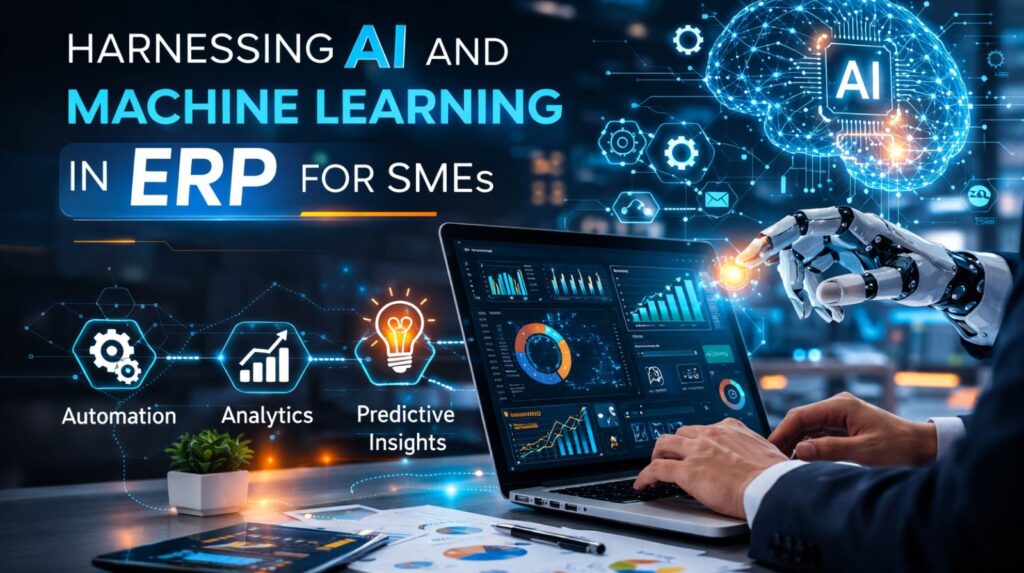
As we progress through 2026, the integration of systems is becoming increasingly vital for small and medium enterprises (SMEs). These technologies are not just trends; they are reshaping how businesses operate by enhancing efficiency, improving decision-making, and driving growth. Businesses using AI and Machine Learning in ERP gain a competitive edge by leveraging these advancements to streamline operations and better serve their customers.
Enterprise Resource Planning (ERP) systems are integrated software solutions that help organizations manage and automate core business processes. These systems encompass various functions, including finance, human resources, supply chain, and customer relationship management.
Importance of ERP for SMEs
For SMEs, ERP systems play a crucial role in consolidating business processes and providing a unified view of operations. By integrating various functions into a single platform, SMEs can enhance data accuracy, reduce operational costs, and improve productivity.
Key Features of ERP Systems
Businesses using machine learning algorithms for SMEs can further enhance these features, allowing for predictive analytics and smarter decision-making capabilities.
AI and Machine Learning in ERP systems by introducing advanced analytics, automation, and enhanced user experiences. These technologies enable ERP systems to not only process data but also learn from it, providing deeper insights and facilitating proactive decision-making.
Enhancing Data Analytics
AI-driven analytics can identify patterns and trends within large datasets, which traditional ERP systems might overlook. This capability allows businesses to forecast demand, optimize inventory levels, and enhance customer satisfaction.
Improving User Experience
AI can facilitate a more intuitive user experience through natural language processing and chatbots. Employees can interact with ERP systems using simple language, making it easier to access information and perform tasks without extensive training.
Businesses using business process automation solutions can streamline operations further, minimizing manual intervention and improving accuracy.
Predictive Maintenance and Operations
Machine learning algorithms can predict equipment failures or operational bottlenecks before they occur. This predictive capability helps SMEs to maintain operational continuity and reduce downtime, which is critical for maintaining competitiveness.
The application of AI in ERP systems is already yielding significant benefits for SMEs across various industries. Here are some real-world examples illustrating this impact.
Case Study: Retail Sector
A mid-sized retail company implemented an AI-powered ERP system that analyzed customer purchasing patterns. By leveraging this data, the company optimized its inventory management, reducing excess stock by 30% and increasing sales by 15% within six months.
Case Study: Manufacturing Industry
A manufacturing firm utilized machine learning to predict equipment failures. The system analyzed historical data and identified patterns leading to breakdowns. As a result, the company reduced maintenance costs by 20% and improved production efficiency.
Businesses using data analytics tools for productivity have seen similar improvements, demonstrating the tangible benefits of integrating AI into ERP systems.
Case Study: Financial Services
A financial services SME adopted AI-driven analytics within its ERP to enhance risk assessment processes. The system evaluated client data and market trends, allowing the firm to make informed lending decisions and reduce default rates by 25%.
The integration of AI and Machine Learning in ERP systems offers numerous benefits for SMEs, making it a worthwhile investment.
Increased Efficiency
AI can automate repetitive tasks, allowing employees to focus on higher-value activities. This leads to improved productivity and faster turnaround times for processes.
Enhanced Decision-Making
With AI-driven insights, decision-makers can access real-time data and predictive analytics. This capability empowers SMEs to make informed strategic decisions, enhancing their competitive positioning.
Businesses using cloud computing benefits for SMEs can further capitalize on these advantages, as cloud-based ERP solutions provide scalability and flexibility for growth.
Cost Savings
By optimizing processes and reducing manual errors, AI integration can lead to significant cost savings. SMEs can allocate resources more effectively, minimizing waste and improving profitability.
Improved Customer Experience
AI can analyze customer interactions and feedback, enabling businesses to tailor their products and services to meet customer needs better. This personalization enhances customer satisfaction and loyalty.g
While the benefits of AI in ERP are clear, SMEs must also navigate several challenges during implementation.
Data Quality and Integration
For AI to be effective, the underlying data must be accurate and well-integrated. Poor data quality can lead to incorrect insights and decisions. SMEs must invest in data governance and integration strategies.
Change Management
Implementing AI and Machine Learning in ERP systems often requires a cultural shift within the organization. Employees may need training to adapt to new technologies, and resistance to change can hinder progress.
Cost of Implementation
While AI can lead to long-term savings, the initial investment in technology and training can be substantial. SMEs must carefully evaluate their budgets and consider the potential return on investment.
As we look ahead, several trends are shaping the future of AI in ERP systems for SMEs.
Increased Adoption of Cloud-Based Solutions
Cloud-based ERP solutions are becoming increasingly popular among SMEs due to their scalability and cost-effectiveness. As AI technologies evolve, cloud-based systems will likely integrate more advanced AI capabilities.
Greater Focus on Security
With the rise of cyber threats, SMEs will need to prioritize security in their ERP systems. AI can play a significant role in enhancing security protocols, identifying vulnerabilities, and responding to threats in real-time.
Evolution of User Interfaces
The user experience will continue to evolve, with AI-driven interfaces becoming more intuitive. Natural language processing and voice recognition will allow users to interact with ERP systems more naturally, improving accessibility and efficiency.

4.9 google Reviews
Lorem ipsum dolor sit amet, consectetur adipiscing elit. Ut elit tellus, luctus nec ullamcorper mattis, pulvinar dapibus leo.