
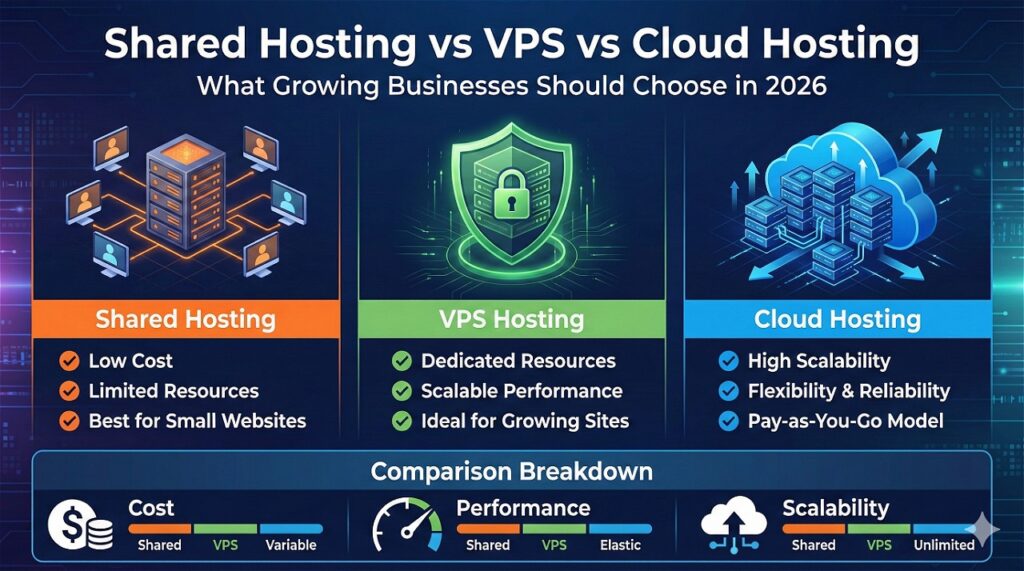
The choice between shared hosting vs VPS vs cloud hosting ultimately depends on your specific business needs, growth trajectory, budget constraints, and technical capabilities. Consider these factors:
Traffic Volume: Current and projected visitor numbers directly impact your hosting requirements. Monitor your analytics to understand growth patterns.
Budget Flexibility: Balance current affordability with future needs. Sometimes investing more initially saves migration headaches later.
Technical Resources: Assess your team’s capabilities or willingness to hire technical support. Managed solutions cost more but save time and prevent costly mistakes.
Growth Plans: If you’re planning aggressive expansion, starting with scalable infrastructure prevents multiple migrations.
Performance Requirements: E-commerce sites, SaaS applications, and high-traffic blogs need faster, more reliable hosting than simple informational websites.
Many successful businesses start with shared hosting, migrate to VPS as they grow, and eventually adopt cloud infrastructure as they scale. There’s no shame in starting small and upgrading strategically. The key is choosing a reputable hosting provider that makes upgrades seamless and supports your business at every stage.
In 2026, the web hosting landscape continues evolving with improved technologies, better pricing models, and more user-friendly management tools. Whatever you choose today doesn’t lock you in forever. Focus on meeting your current needs while selecting a provider that can grow with you, and you’ll position your business for online success.