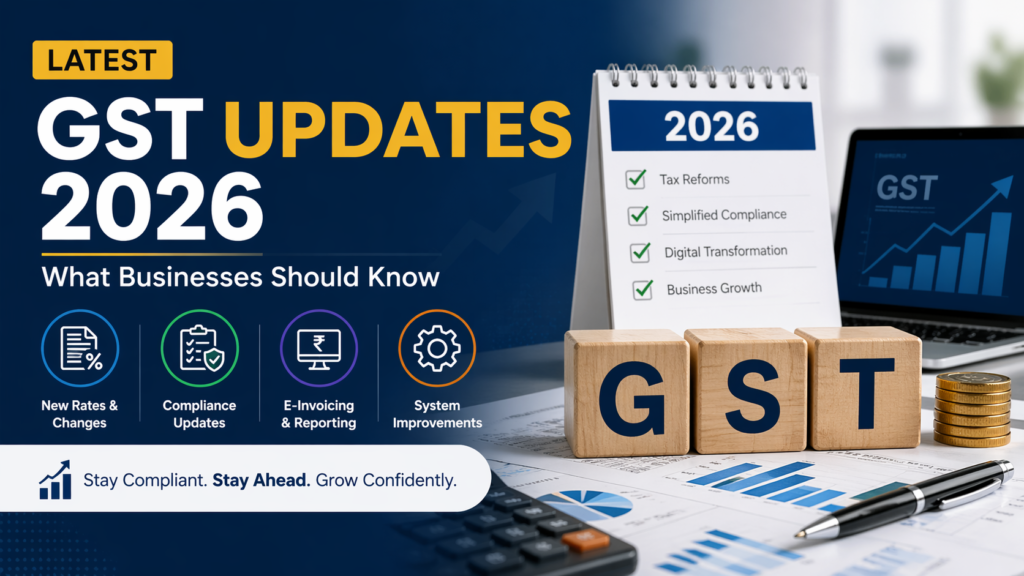
Navigating the is crucial for Indian businesses, including SMEs and startups, as they face an evolving tax landscape. The Goods and Services Tax (GST) has undergone significant changes aimed at improving compliance and efficiency. Understanding these updates is essential for seamless operations and growth. In this blog, we will delve into the key updates, their impact on businesses, and essential compliance tips to ensure you stay ahead in 2026.
The GST updates framework in India has been a dynamic system since its inception. As we move into 2026, businesses must be aware of the that can directly affect their operations. With the introduction of new rules and compliance measures, it’s vital for business owners to stay informed and adapt accordingly. This article will provide insights into the latest updates and practical advice for managing GST effectively.
Key GST Updates for 2026
New GST Rates and Categories
One of the significant for 2026 is the introduction of revised tax slabs for specific goods and services. Recent data shows that the government has streamlined rates to enhance clarity and compliance. For instance, essential goods may see a reduction in tax rates, while luxury items could face higher taxes.
Simplified Filing Procedures
The for 2026 include a shift towards more digital processes. Businesses can expect a simplified online filing system that reduces paperwork and streamlines submissions. This change aims to improve efficiency and reduce the compliance burden on companies, especially small businesses.
Enhanced Input Tax Credit (ITC) Provisions
In 2026, the rules governing input tax credit have been revised. Businesses will find it easier to claim ITC, provided they meet specific conditions. This update is particularly beneficial for , as it encourages proper record-keeping and compliance.
Financial Implications
The will have significant financial implications for businesses. With the revised tax rates and simplified filing procedures, companies can expect changes in their cash flow management. For instance, businesses may experience a temporary increase in costs due to new compliance requirements, but the long-term benefits of streamlined processes could outweigh these initial expenses.
Compliance Burden
While the updates aim to simplify GST updates compliance, businesses must still invest time and resources to understand the new rules. Many businesses report challenges in adapting to changes, particularly smaller firms with limited resources. This necessitates a proactive approach to training and development to ensure compliance.
Competitive Advantage
Businesses that adapt quickly to the landscape can gain a competitive advantage. By leveraging the new rules and optimizing their processes, companies can enhance their operational efficiency and reduce costs. This adaptability will be crucial in maintaining market relevance in an increasingly competitive environment.
Stay Updated with Notifications
To ensure compliance, businesses should regularly check for updates from the GST Council. This includes following official channels and subscribing to notifications for any changes in rules or rates. Being proactive can help businesses avoid penalties and stay ahead of compliance requirements.
Invest in Training Programs
Training employees on the latest GST regulations is essential. Companies should invest in training programs to ensure that their finance teams are well-versed in the . This investment not only enhances compliance but also empowers employees to manage GST-related tasks effectively.
Utilize Technology for Compliance
Businesses should leverage technology to manage GST compliance more efficiently. Utilizing software solutions designed for can automate filing processes, track expenses, and ensure accurate record-keeping. This not only saves time but also reduces the risk of errors in submissions.
Ignoring Documentation Requirements
One of the most common mistakes businesses make is neglecting proper documentation. In 2026, maintaining accurate records is more critical than ever, especially with the revised ITC provisions. Businesses must ensure that all invoices and receipts are correctly documented to claim input tax credit effectively.
Missing Deadlines
Failing to adhere to compliance deadlines can result in penalties and interest charges. Businesses must be diligent in tracking and preparing submissions well in advance. Setting reminders and utilizing digital tools can help mitigate this risk.
Underestimating Changes in Tax Rates
With the new tax rates introduced in 2026, businesses must be cautious not to underestimate the impact on pricing and profitability. Regularly reviewing pricing strategies in light of these changes will be essential for maintaining margins.
Continued Digital Transformation
The future of GSTupdates in India will likely see increased digitalization. As technology continues to evolve, businesses can expect more automated processes and enhanced digital interfaces for filing and compliance. This trend will simplify operations and promote transparency.
Greater Focus on Compliance Enforcement
In the coming years, the government may enhance compliance enforcement measures. Businesses should prepare for more rigorous audits and inspections as authorities aim to curb tax evasion. Staying compliant will require ongoing vigilance and adaptation to new regulations.
Evolution of GST Framework
The GST framework itself may continue to evolve, with potential changes in rates and categories based on economic conditions and government policy. Businesses should remain flexible and ready to adapt to these changes as they arise.

4.9 google Reviews
Lorem ipsum dolor sit amet, consectetur adipiscing elit. Ut elit tellus, luctus nec ullamcorper mattis, pulvinar dapibus leo.