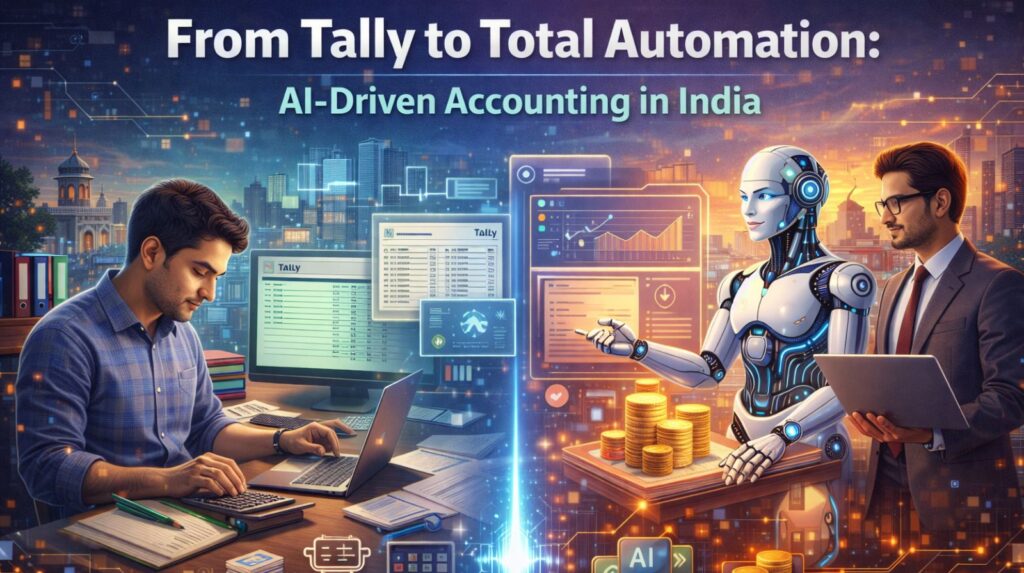
In recent years, Indian businesses have begun transitioning from traditional accounting tools like Tally to more sophisticated . This evolution is not merely a trend but a necessity in a rapidly changing financial landscape. As the demand for efficiency and accuracy increases, many organizations are embracing Tally to automation and other advanced AI accounting solutions to streamline their financial operations. This blog delves into how these systems are transforming the accounting landscape for Indian SMEs and startups.
Tally has long been a staple in Indian accounting, known for its user-friendly interface and robust features. However, as businesses grow and the market evolves, the limitations of traditional Tally software become apparent. Tally to automation is reshaping how businesses manage their financial data, moving towards a more integrated and intelligent approach.
Businesses using Learn about Tally automation gain a competitive edge by automating routine tasks, thereby reducing the time spent on manual entries. This shift allows accountants to focus on more strategic activities, such as financial analysis and forecasting, rather than getting bogged down in data entry.
The Need for Automation
The need for automation arises from the increasing complexity of financial regulations and the sheer volume of transactions that businesses handle daily. With automation, Tally can now integrate seamlessly with other software solutions, providing a holistic view of financial health and compliance.
Enhancements in Tally Features
Recent updates to Tally have introduced features that support automation, including real-time reporting and data analytics. These enhancements enable businesses to make informed decisions quickly, adapting to market changes and customer needs.
Case Studies
Many businesses have successfully transitioned to Tally automation, reporting significant improvements in operational efficiency. For instance, a mid-sized manufacturing firm noted a 30% reduction in time spent on financial reporting after implementing automated Tally solutions. This not only saved time but also reduced the likelihood of errors, leading to more accurate financial statements.
Offer a transformative approach to financial management. These systems leverage artificial intelligence to automate processes, analyze data, and provide insights that traditional tools cannot match.
Businesses using Explore AI accounting software in India gain a competitive edge by harnessing the power of AI to streamline their accounting processes. This technology helps in automating repetitive tasks, thereby minimizing human error and enhancing productivity.
Key Features of AI-Driven Systems
AI-driven systems typically include features such as predictive analytics, automated data entry, and intelligent reporting. These capabilities allow businesses to gain insights into their financial health and make data-driven decisions.
Benefits of AI Integration
Integrating AI into accounting systems helps businesses reduce operational costs and improve accuracy. For example, AI can analyze past financial data to predict future trends, enabling proactive decision-making.
Real-World Applications
In 2026, many Indian companies have adopted AI-driven accounting systems. A notable example is a fintech startup that utilized AI to automate its invoicing process, resulting in a 40% decrease in payment delays. This not only improved cash flow but also enhanced customer satisfaction.
Tally to automation plays a crucial role in modern accounting practices by bridging the gap between traditional methods and innovative technologies.
Businesses using Discover GST automation tools can ensure compliance and streamline their tax processes. Automation helps in generating GST reports seamlessly, reducing the time and effort required for tax filing.
Streamlining Financial Processes
Tally automation streamlines various financial processes, including payroll, invoicing, and expense management. By automating these functions, businesses can significantly reduce the risk of errors associated with manual entries.
Enhancing Compliance
With the increasing complexity of tax regulations in India, compliance is a significant concern for businesses. Tally automation ensures that all financial transactions are recorded accurately, making it easier to adhere to regulatory requirements.
Success Stories
Several SMEs have reported enhanced compliance and reduced audit risks after implementing Tally automation. A small retail business, for instance, managed to cut down its audit preparation time by 50%, thanks to automated record-keeping.
As the Goods and Services Tax (GST) continues to evolve, businesses must adapt their accounting practices accordingly. GST automation tools are essential for ensuring compliance and simplifying tax management.
Businesses using Understand automated bookkeeping AI can automate the reconciliation of GST returns, making compliance less cumbersome. This is particularly beneficial for SMEs that often struggle with the complexities of tax regulations.
Benefits of GST Automation
GST automation tools help businesses maintain accurate records of their transactions, making it easier to file returns on time. This not only minimizes the risk of penalties but also enhances overall operational efficiency.
Integration with Accounting Systems
The integration of GST automation tools with accounting systems like Tally ensures that businesses can manage their tax obligations effortlessly. Automated calculations and reporting reduce the chances of human error, leading to more accurate filings.
Case Examples
In 2026, many businesses have embraced GST automation, reporting smoother filing processes and reduced compliance costs. For instance, an e-commerce platform noted a 25% decrease in the time spent on GST compliance after implementing automation tools.
Automated bookkeeping AI is revolutionizing how businesses manage their financial records. By leveraging AI technology, companies can significantly reduce the amount of manual work involved in bookkeeping.
Businesses using Find smart accounting solutions for SMEs can automate data entry, invoicing, and financial reporting. This not only saves time but also minimizes errors, leading to more reliable financial data.
The Impact of Automation on Accuracy
One of the primary benefits of automated bookkeeping AI is its ability to enhance accuracy. By eliminating manual data entry, businesses can reduce the likelihood of errors that can lead to costly mistakes.
Efficiency Gains
Automation also leads to significant efficiency gains. For example, a logistics company that adopted automated bookkeeping reported a 50% reduction in the time required for monthly financial reconciliations.
Future Trends
As technology continues to evolve, the role of automated bookkeeping AI will become increasingly prominent. By 2026, many businesses will rely heavily on these systems to maintain accurate financial records and streamline their accounting processes.
The application of AI in finance is gaining traction across various sectors in India. Businesses are harnessing AI to enhance their financial operations and decision-making processes.
Examples of AI Implementation
In 2026, several Indian startups are utilizing AI-driven solutions for various financial tasks. A prominent example is a healthcare startup that employs AI for fraud detection in billing processes, significantly reducing financial losses.
Benefits Realized
The use of AI in finance has led to improved operational efficiency, reduced costs, and enhanced decision-making capabilities. Companies adopting these technologies report faster turnaround times and improved accuracy in financial reporting.
Case Studies
A fintech company in India successfully implemented AI algorithms to analyze customer creditworthiness, leading to a 30% increase in loan approvals. This not only improved customer satisfaction but also boosted the company’s revenue.
Smart accounting solutions are essential for startups and SMEs aiming to scale their operations efficiently. These solutions often integrate AI capabilities to provide comprehensive financial management tools.
Features of Smart Solutions
Many smart accounting solutions offer features such as real-time financial tracking, automated reporting, and data analytics. These capabilities empower businesses to make informed decisions based on accurate financial data.
Benefits for Startups
For startups, leveraging smart accounting solutions can lead to significant cost savings and operational efficiencies. By automating financial processes, startups can focus more on growth and innovation rather than administrative tasks.
Success Stories
In 2026, numerous startups have reported success after implementing smart accounting solutions. A tech startup, for example, experienced a 40% reduction in operational costs by automating its accounting processes, allowing it to reinvest those savings into product development.
The shift towards digital accounting transformation is reshaping how businesses operate. As more companies adopt digital tools, the landscape of accounting is changing rapidly.
Embracing Digital Tools
In 2026, many businesses are embracing digital tools to enhance their accounting practices. This transition is driven by the need for greater efficiency, accuracy, and compliance in financial management.
Benefits of Digital Transformation
Digital accounting transformation enables businesses to streamline their processes, reduce manual work, and enhance data accuracy. Companies that have adopted these tools report improved financial visibility and decision-making capabilities.
Future Trends
The future of accounting lies in digital transformation, with businesses increasingly relying on AI and automation to manage their financial operations. This trend is expected to continue, leading to more innovative solutions in the accounting space.
Data-driven decision-making is becoming a cornerstone of modern accounting practices. By leveraging data analytics, businesses can make more informed financial decisions.
Importance of Data Analytics
In 2026, data analytics is critical for businesses looking to gain insights into their financial performance. Companies that utilize data-driven approaches report better forecasting and strategic planning capabilities.
Enhancing Financial Strategies
Data-driven decision-making enables businesses to identify trends, assess risks, and optimize their financial strategies. This proactive approach helps companies stay ahead in a competitive market.
Real-World Examples
Many organizations in India have adopted data-driven decision-making in their accounting practices. A retail company that implemented data analytics reported a 20% increase in sales after optimizing its inventory management based on analytical insights.
As AI technology continues to evolve, many wonder whether it will fully automate accounting tasks or merely redefine the role of accountants in India.
The Role of Accountants
While AI can automate many routine tasks, the role of accountants is likely to shift rather than disappear. Accountants will increasingly focus on strategic decision-making, financial analysis, and advisory roles.
Predictions for the Future
In 2026, the accounting profession is expected to evolve significantly, with AI handling repetitive tasks while accountants provide valuable insights and guidance to businesses. This hybrid model will enhance the value accountants bring to their organizations.
The transition from traditional accounting methods to is a significant step towards greater efficiency and accuracy in financial management. As businesses continue to adopt Tally to automation, GST tools, and automated bookkeeping AI, they are poised to scale faster and make more informed decisions. The future of accounting will likely see a partnership between AI and human expertise, redefining the role of accountants while enhancing overall financial operations.

4.9 google Reviews
Lorem ipsum dolor sit amet, consectetur adipiscing elit. Ut elit tellus, luctus nec ullamcorper mattis, pulvinar dapibus leo.