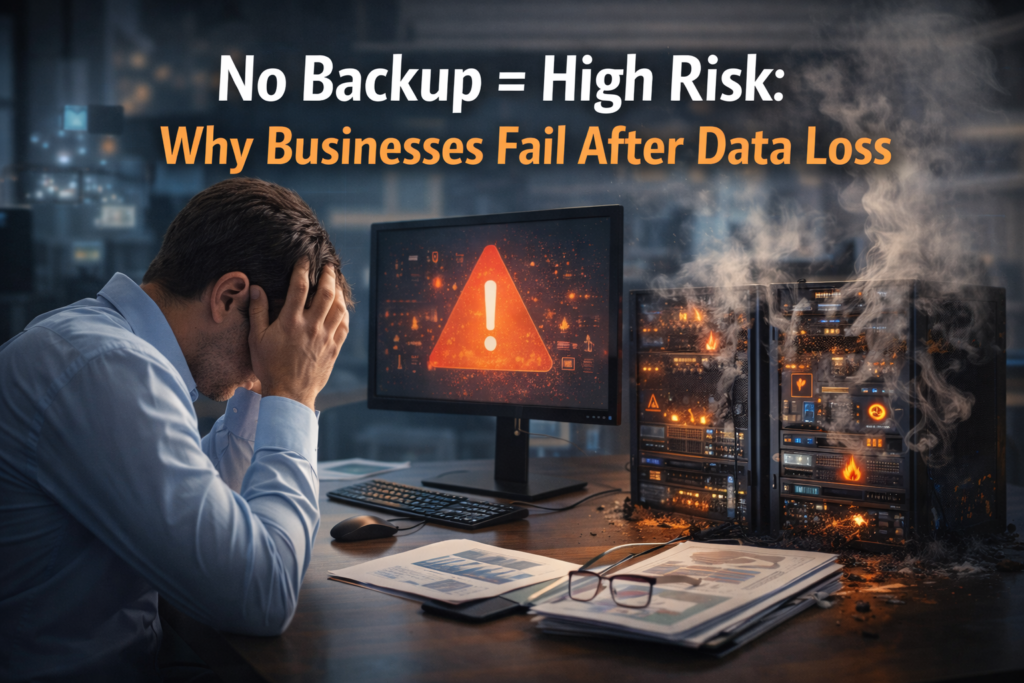
The question “why do businesses fail after data loss?” has a multifaceted answer rooted in operational, financial, and reputational factors.
Operational Paralysis
Modern businesses run on data. Every transaction, customer interaction, inventory movement, and strategic decision relies on accessible information. When data loss occurs without backup recovery options, operations cease immediately. Employees cannot access customer histories, sales teams lose pipeline information, accounting departments cannot process payments, and supply chain management collapses.
This operational paralysis creates a domino effect. Customers seeking service encounter dysfunction, suppliers don’t receive orders, and partners lose confidence. Even a brief interruption can cause irreparable damage to business relationships built over years.
Financial Devastation
Business continuity depends on cash flow, and No Backup strikes directly at revenue generation. Companies cannot invoice clients without transaction records, cannot collect receivables without customer data, and cannot manage expenses without financial systems. The immediate revenue loss combines with recovery costs—hiring data recovery specialists, purchasing new systems, and potentially paying ransom demands—to create a financial perfect storm.
Small and medium-sized businesses are particularly vulnerable. Without the financial cushion of large enterprises, they cannot absorb the dual impact of lost revenue and recovery expenses. This explains why small business data loss so frequently leads to permanent closure.
Regulatory and Legal Consequences
In an era of stringent data protection regulations like GDPR, HIPAA, and CCPA, data loss can trigger severe legal penalties. Businesses that lose customer data may face lawsuits, regulatory fines, and mandatory breach notifications that publicly expose their security failures. The legal costs alone can exceed what many companies can sustain.
Furthermore, contractual obligations often require specific data protection measures. Failing to maintain adequate backup and disaster recovery systems can void contracts, insurance policies, and partnership agreements, compounding the financial damage.
Reputation Destruction
Perhaps the most insidious consequence of data loss is reputational damage. In the age of social media and online reviews, news of a data breach or massive loss spreads instantly. Customers lose trust, prospects choose competitors, and rebuilding credibility can take years—if it’s possible at all.
Studies show that 29% of businesses experiencing data loss lose customers permanently. Once confidence erodes, even restored systems cannot restore faith. This is why business data backup should be viewed not just as IT infrastructure but as a core component of brand protection.