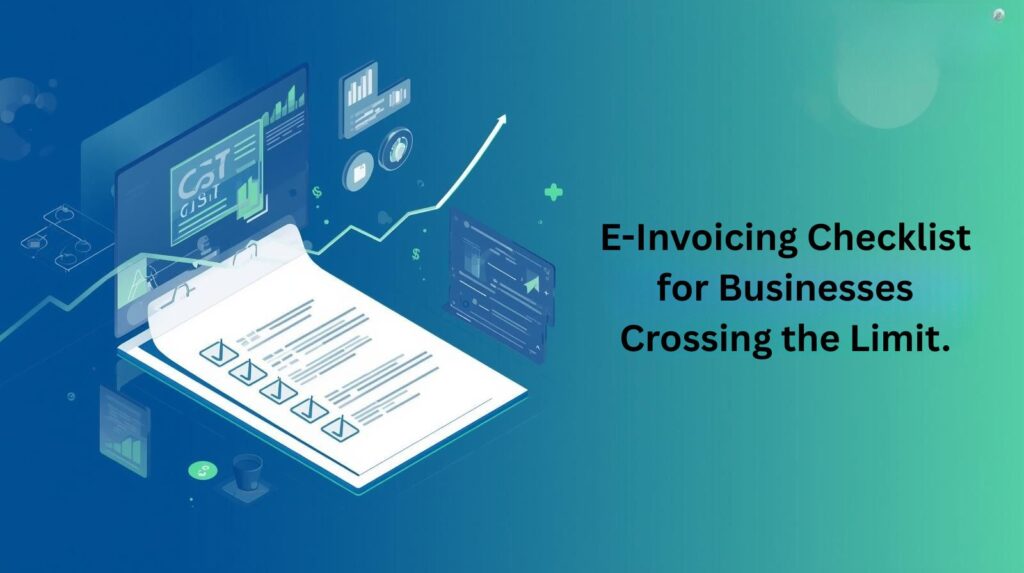
E-invoicing under GST is no longer a “future compliance” topic. For many businesses, it becomes mandatory the moment you cross the prescribed turnover limit. Yet, a large number of companies realize this too late—often after receiving notices, invoice rejections, or blocked ITC issues. If your business is approaching or has crossed the e-invoicing threshold, this guide will help you prepare in advance, avoid disruption, and stay fully compliant.
E-invoicing is a system where B2B invoices are registered on the Invoice Registration Portal (IRP) and assigned a unique Invoice Reference Number (IRN) along with a QR code.
Once e-invoicing is mandatory for your business:
Invoices without IRN are considered invalid
Buyers may lose Input Tax Credit (ITC)
Non-compliance can attract penalties and scrutiny
E-invoicing applicability is based on aggregate annual turnover, not invoice value.
As per GST rules:
If your business turnover crosses the notified threshold in any financial year, e-invoicing becomes mandatory from the specified date.
Once applicable, it continues to apply, even if turnover falls later.
👉 Important: Turnover is calculated PAN-India, not GSTIN-wise.
Why Businesses Struggle With E-Invoicing Compliance
Most problems arise because businesses:
Assume their accounting software will “handle it automatically”
Ignore process changes required for IRN generation
Don’t train staff before going live
Continue issuing invoices in old formats
E-invoicing is not just a technical change—it’s an operational change.
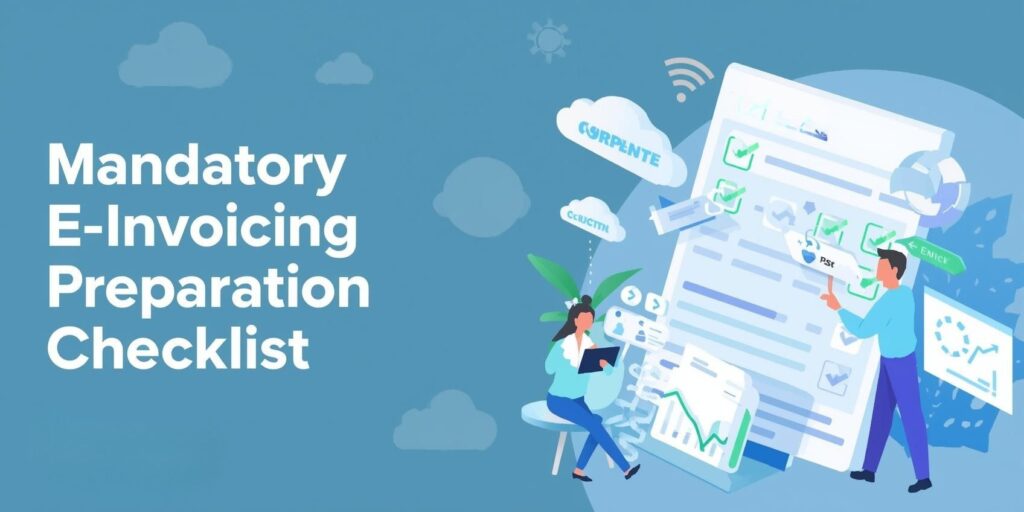
Below is a practical checklist every business should complete once it crosses the limit.
1. Confirm Your E-Invoicing Applicability
First, verify:
Your aggregate turnover across all GSTINs
The financial year in which the limit was crossed
The effective date of e-invoicing applicability
Do not rely on assumptions—confirm with your CA or compliance team.
2. Upgrade or Configure Your Accounting Software
Your accounting or ERP system must:
Generate invoices in the GST-prescribed schema
Support IRN and QR code integration
Handle real-time or batch IRP uploads
Popular software like Tally, ERP systems, or cloud accounting tools often require specific configuration or add-ons.
Old or pirated software setups are a major risk here.
3. Register on the Invoice Registration Portal (IRP)
Ensure that:
Your GSTIN is active
You are registered on the IRP portal
API or offline utilities are tested in advance
Without proper IRP access, invoices cannot be legally issued.
4. Update Invoice Formats
Your invoice must include:
IRN (Invoice Reference Number)
QR code generated by IRP
Correct GST details (buyer & seller)
Mandatory fields as per schema
Invoices printed or shared without IRN are non-compliant, even if GST is charged.
5. Train Your Team Before Go-Live
Common mistakes happen when:
Accounts teams generate invoices without IRN
Sales teams issue proforma invoices incorrectly
Staff are unaware of cancellation timelines
Train your team on:
When IRN is required
How cancellations work (within allowed time)
What to do if IRP fails
Human error is the biggest compliance risk.
6. Test E-Invoicing in a Controlled Environment
Before full rollout:
Test IRN generation with sample invoices
Validate data accuracy (GSTIN, HSN, tax rates)
Check integration between accounting software and IRP
Testing avoids live failures that can halt billing operations.
7. Align E-Invoicing With E-Way Bill (If Applicable)
If your business also requires e-way bills:
Ensure invoice data flows correctly into e-way bill generation
Avoid duplicate data entry
Confirm transport details integration
Poor alignment causes delays and reconciliation issues.
8. Maintain Proper Records and Audit Trails
E-invoicing increases data visibility for tax authorities.
Maintain:
IRN logs
Cancelled invoice records
Error and rejection reports
These records are critical during GST audits and assessments.
Non-compliance can result in:Invalid invoices
Buyer ITC rejection
Penalties per invoice
Business credibility loss
Increased GST scrutiny
In short, ignoring e-invoicing is not a cost-saving move—it’s a compliance risk.
Crossing the e-invoicing limit is not just a milestone—it’s a compliance turning point.
Businesses that prepare early:
Avoid operational disruption
Protect customer relationships
Stay audit-ready
Build long-term compliance discipline
Use this checklist as soon as you approach the threshold. In GST compliance, late preparation is expensive preparation.
4.9 google Reviews
Lorem ipsum dolor sit amet, consectetur adipiscing elit. Ut elit tellus, luctus nec ullamcorper mattis, pulvinar dapibus leo.